Last updated: June 2026
DISCLAIMER: This article is provided for informational purposes only and does not constitute legal or tax advice. Italian property law is complex and fact-specific. FrankVest strongly recommends engaging a qualified Italian notaio and a cross-border tax adviser before proceeding with any acquisition. Laws and rates referenced herein reflect the position as of June 2026 and are subject to change.
Table of Contents
- Why Tuscany Remains a Top Destination for Foreign Property Investment
- Legal Capacity of Foreign Buyers to Acquire Property in Italy
- The Italian Property Purchase Process: Key Legal Stages
- Cadastral and Urban Planning Due Diligence in Tuscany
- Pre-Emption Rights: Farmland, Historic Properties, and Co-Owners
- Transaction Taxes and Registration Costs for Foreign Buyers
- Structuring the Acquisition: Personal Ownership vs. Italian Entity
- Capital Gains Tax on Future Disposal
- Short-Term Rental Regulation and IMU in Tuscany
- Frequently Asked Questions
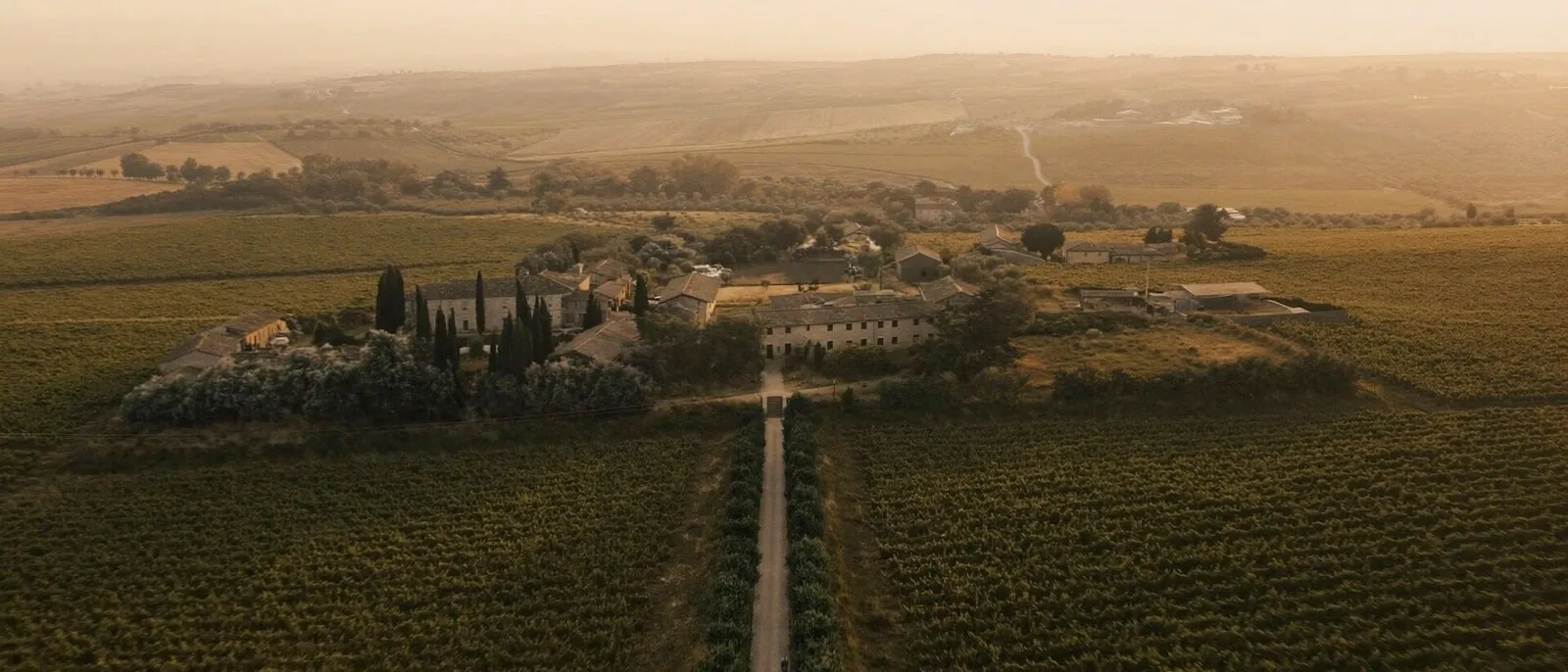
Foreign investors buying property in Tuscany enter one of the world’s most sought-after real estate markets — and one of its most legally layered. Tuscany offers a combination of world-class wine estates, historic hilltop villages, Renaissance architecture, and a legal framework that, while not without complexity, is well-established and navigable with proper advice. From a restructured farmhouse in the Val d’Orcia to a historic palazzo in Florence or a coastal villa on the Argentario peninsula, Tuscany accommodates an exceptionally broad range of acquisition profiles.
Foreign investment appetite in Tuscany has remained resilient through market cycles. According to data from the Agenzia delle Entrate, non-resident foreign buyers accounted for a disproportionate share of high-value residential transactions in the provinces of Siena, Florence, and Grosseto throughout 2024 and 2025. This demand is underpinned partly by Italy’s €100,000 flat tax regime under Article 24-bis of the Testo Unico delle Imposte sui Redditi (TUIR), which continues to attract high-net-worth relocators — though Tuscany-specific acquisition rules remain relevant regardless of one’s tax residency position.
What many buyers underestimate is the degree to which Tuscany’s property market is shaped by layers of local regulation that sit on top of national Italian law. Landscape protection under the UNESCO designation of the Val d’Orcia, agricultural land pre-emption rights, restrictions on changes of use for rural buildings, and the Regione Toscana’s own planning legislation (Legge Regionale Toscana n. 65/2014) all interact in ways that can surprise even experienced real estate investors. Getting the legal groundwork right before signing any preliminary agreement is not optional — it is essential.
This guide walks through each stage of a Tuscan property acquisition from a legal and tax perspective, identifying the specific norms that apply, the costs to budget for, and the structural questions that a sophisticated investor should resolve before exchange.
1. Why Tuscany Remains a Top Destination for Foreign Property Investment
Tuscany’s appeal is not merely aesthetic. From a legal investment perspective, the region offers relatively liquid secondary market liquidity for high-value assets, a mature professional infrastructure of notai, geometri, and specialist law firms, and proximity to international airports at Florence and Pisa. Property values in premium micro-markets — Chianti Classico, Montalcino, Cortona, the Lunigiana — have demonstrated consistent appreciation in euro terms, with additional upside in dollar or sterling terms during periods of euro weakness.
The Tuscan market also benefits from a legal concept familiar to investors: the cascina or podere, a rural agricultural property unit with established cadastral identity. This clarity of cadastral definition — compared with more fragmented ownership structures in southern Italy — simplifies due diligence, though it introduces its own set of agricultural pre-emption considerations addressed in Section 5 below.
2. Legal Capacity of Foreign Buyers to Acquire Property in Italy
Italy operates on the principle of reciprocity under Article 16 of the Preliminary Provisions to the Civil Code (Disposizioni preliminari al Codice Civile). In practice, citizens of all EU and EEA member states, as well as nationals of countries with bilateral treaties with Italy (including the United States, United Kingdom, Canada, Australia, Switzerland, and most OECD nations), may freely acquire Italian real estate.
Non-EU buyers who are not resident in Italy will require an Italian codice fiscale (tax identification number), issued by the Agenzia delle Entrate or an Italian consulate abroad. This is a purely administrative requirement and carries no tax residency implications. Power of attorney (procura speciale) executed before an Italian consulate or apostilled notary in the buyer’s home jurisdiction allows acquisitions to proceed without the buyer physically present in Italy for signing — a practical consideration for international transactions.
3. The Italian Property Purchase Process: Key Legal Stages
The Italian conveyancing process involves three formal stages. First, a proposta d’acquisto (purchase offer), which once countersigned creates a binding preliminary obligation. Second, the compromesso or contratto preliminare di compravendita, a bilateral preliminary contract governed by Articles 1351 and 2932 of the Codice Civile, typically requiring a deposit (caparra confirmatoria) of 10–30% of the agreed price. If the seller withdraws after signing, they must return double the caparra; if the buyer withdraws, the deposit is forfeited. Third, the rogito notarile — the final notarial deed executed before a public notaio, which transfers legal title and is subject to mandatory transcription in the Conservatoria dei Registri Immobiliari under Article 2643 of the Codice Civile.
From compromesso to rogito, the typical timeline is 60–120 days, extended where mortgage financing is involved or where due diligence reveals issues requiring remediation. The notaio acts as a neutral public official — not as the buyer’s adviser — which is precisely why independent legal representation is critical.
4. Cadastral and Urban Planning Due Diligence in Tuscany
Due diligence in Tuscany must address two parallel registers: the Catasto (cadastral registry, managed by the Agenzia delle Entrate) and the municipal planning registers (Piano Strutturale and Piano Operativo under L.R. Toscana 65/2014). A property may be correctly registered in the Catasto but have unauthorised structures, altered intended use, or breaches of the piano regolatore that render it non-conforming.
Rural properties in particular require verification that any structures (stone outbuildings, pools, ancillary farm buildings) have legitimate planning permission (permesso di costruire, formerly concessione edilizia, or SCIA/CILA notifications under D.P.R. 380/2001) and that the agricultural classification has not been unlawfully changed. The sanatoria provisions under the Testo Unico dell’Edilizia (D.P.R. 380/2001), specifically Articles 36 and 37, allow certain irregularities to be regularised by way of accertamento di conformità, but material abuses — particularly in UNESCO-protected landscapes — may be irremediable. Buyers should insist on a full conformità urbanistica e catastale certification from a qualified geometra or architetto before contracts are exchanged.
5. Pre-Emption Rights: Farmland, Historic Properties, and Co-Owners
Pre-emption rights (diritti di prelazione) are one of the most commonly overlooked risks in Tuscan acquisitions. Three categories are relevant.
Agricultural pre-emption under L. 590/1965 and L. 817/1971 grants tenant farmers (affittuari coltivatori diretti) and neighbouring agricultural landowners (coltivatori diretti confinanti) the right to match any agreed purchase price when agricultural land changes hands. The seller must formally notify eligible pre-emptors by raccomandata a/r; pre-emptors then have 30 days to exercise their right. Failure to give proper notice does not void the sale, but entitles the pre-emptor to substitute themselves into the transaction within one year of the deed date — with obvious consequences for a buyer who has already completed and commenced works.
Cultural heritage pre-emption under D.Lgs. 42/2004 (the Codice dei Beni Culturali e del Paesaggio), specifically Articles 60 and 61, applies to properties subject to a dichiarazione di interesse culturale (vincolo) under Article 10 of the same decree. The Ministry of Culture (MiC) has 60 days following notification of a proposed sale under Article 59 D.Lgs. 42/2004 to exercise its right of first refusal at the agreed price. Many historic Tuscan properties — particularly in historic centres — carry this risk.
Co-ownership pre-emption under Article 732 of the Codice Civile applies where there are multiple co-owners of a property; any co-owner wishing to sell their quota must first offer it to the remaining co-owners at the same price and conditions.
6. Transaction Taxes and Registration Costs for Foreign Buyers
Transaction taxes depend on whether the seller is a private individual or a VAT-registered entity, and on the buyer’s residency status. For purchases from a private seller, registration tax (imposta di registro) applies at 9% of the cadastral value (valore catastale, calculated as rendita catastale × a statutory multiplier) pursuant to Article 1 of the Tariffa, Parte Prima, allegata al D.P.R. 131/1986, as amended by L. 147/2013. If the buyer qualifies as a prima casa (first home) purchaser — requiring establishment of Italian residency within 18 months of the deed under Note II-bis to the same Tariffa — the rate falls to 2%. Non-residents who do not commit to transferring residency to the municipality of the property within the prescribed 18-month period cannot access prima casa rates.
For purchases from a developer or construction company within 5 years of completion, VAT at 10% (or 22% for luxury properties classified in cadastral categories A/1, A/8, A/9) applies instead of registration tax pursuant to n. 127-undecies of Table A, Part III of D.P.R. 633/1972, plus a fixed €200 registration tax. Additional fixed taxes (imposta ipotecaria and imposta catastale) apply at €50 each in the VAT scenario pursuant to D.Lgs. 347/1990.
Notarial fees typically range from 1–2.5% of the purchase price depending on complexity. Agency commissions in Tuscany, where applicable, are typically 3–4% from each party. Buyers should budget total transaction costs of 10–15% on top of the agreed price.
7. Structuring the Acquisition: Personal Ownership vs. Italian Entity
Foreign investors frequently ask whether to acquire through an Italian società (typically an S.r.l.) or in personal name. There is no universally correct answer; the optimal structure depends on intended use, holding period, inheritance plans, and home-country tax treatment.
An Italian S.r.l. can be efficient for buy-to-let assets generating rental income — costs are deductible, and corporate IRES (currently 24% pursuant to Article 77 TUIR) may compare favourably with personal IRPEF rates that reach 43% above €50,000 of taxable income pursuant to Article 11 TUIR. However, a property held in a corporate structure does not benefit from prima casa exemptions, attracts IRAP on operational activity under D.Lgs. 446/1997, and creates a layer of complexity and ongoing compliance cost. Residential use of a company-owned property by the shareholder also triggers fringe benefit taxation under Article 51 TUIR. EU anti-abuse provisions and Italy’s domestic general anti-avoidance rule under Article 10-bis of L. 212/2000 (Statuto dei Diritti del Contribuente), as introduced by D.Lgs. 128/2015, mean purely tax-driven interpositions face scrutiny.
For personal-use villas and rural estates intended for the investor’s own enjoyment, direct personal ownership remains the most straightforward structure, particularly where the investor also benefits from the flat tax regime under Article 24-bis TUIR, which shelters foreign-source income but leaves Italian-source income (including Italian rental income) fully taxable under the ordinary IRPEF rules.
8. Capital Gains Tax on Future Disposal
Capital gains on Italian real estate sold within 5 years of acquisition are taxable as miscellaneous income (redditi diversi) under Article 67(1)(b) TUIR, subject to IRPEF at progressive rates up to 43%, unless the taxpayer elects the flat 26% imposta sostitutiva under Article 68(6-bis) TUIR — an election made before the notaio at the time of the sale deed pursuant to Article 1, comma 496, of L. 266/2005, as most recently amended. After 5 years, gains on non-business residential property held in personal name are exempt from Italian capital gains tax under the same Article 67(1)(b) TUIR, which expressly excludes from taxation properties that have been used as the seller’s principal dwelling for the majority of the holding period, as well as properties held for more than five years.
Properties held as business assets within an Italian entity are subject to corporate taxation on any gain at disposition under Article 86 TUIR, without the benefit of the 5-year exemption. Foreign buyers should also evaluate double tax treaty provisions between Italy and their home jurisdiction — Italy’s treaty network (based on the OECD Model Convention) generally reserves to Italy the right to tax gains on the alienation of Italian real estate regardless of the seller’s residence under the relevant Article 13 of each applicable treaty, meaning a domestic exemption in the seller’s home country may not eliminate Italian tax exposure.
9. Short-Term Rental Regulation and IMU in Tuscany
Foreign owners who intend to let their Tuscan property on a short-term basis (contratti di locazione breve, defined as leases of up to 30 days to natural persons for non-business purposes under Article 4 of D.L. 50/2017, converted with amendments by L. 96/2017) must obtain a Codice Identificativo Nazionale (CIN) under Article 13-ter of D.L. 145/2023, converted by L. 191/2023, display it on all listings and at the property, and comply with guest registration obligations with the Questura under D.M. 7 January 2013. Platforms such as Airbnb and Booking.com are required to verify CIN compliance and withhold the 21% cedolare secca flat tax on short-term rental income where the owner uses an intermediary, remitting it to the Agenzia delle Entrate pursuant to Article 4, comma 5-bis, of D.L. 50/2017.
Regione Toscana imposes additional requirements including classification and SCIA filings with the relevant Comune under L.R. Toscana 86/2016 on tourist accommodation activities. Municipalities in high-pressure tourism areas — notably Florence — have introduced further restrictions on new short-term rental authorisations in certain historic centre zones pursuant to local delibere adopted under Article 13-ter, comma 4, of D.L. 145/2023.
IMU (Imposta Municipale Unica) applies to all Italian property owned by non-residents at rates set by each Comune within the bands established by L. 160/2019, typically between 0.86% and 1.06% of the adjusted cadastral value for properties other than the principal dwelling. There is no IMU exemption for non-resident property owners, and the tax is payable in two instalments (16 June and 16 December) annually pursuant to Article 1, comma 762, of L. 160/2019.
Frequently Asked Questions
Can foreign nationals legally buy property in Tuscany? Yes. Italy applies the principle of reciprocity under Article 16 of the Preliminary Provisions to the Civil Code, and citizens of the EU/EEA, the United States, the United Kingdom, and most OECD countries may freely acquire Tuscan real estate. A non-resident buyer needs only an Italian codice fiscale (tax code), which carries no tax-residency consequences, and can complete the entire purchase remotely by granting a procura speciale (special power of attorney) to a representative in Italy.
What taxes and costs should I budget when buying in Tuscany? For a purchase from a private seller, registration tax (imposta di registro) is 9% of the cadastral value, reduced to 2% if you qualify for prima casa relief by transferring residence to the property’s municipality within 18 months. Purchases from a developer within five years of completion attract VAT at 10% (22% for luxury categories A/1, A/8, A/9) instead. Adding notarial fees (roughly 1–2.5%) and any agency commission (3–4%), buyers should budget total transaction costs of about 10–15% on top of the price.
Can a pre-emption right undo my purchase after completion? It can. If eligible pre-emptors are not properly notified, an agricultural pre-emptor under Law 590/1965 (Art. 8) and Law 817/1971 may substitute themselves into the transaction within one year of the deed. Cultural-heritage pre-emption under Article 60 of D.Lgs. 42/2004 gives the Ministry of Culture 60 days to buy a vincolo-protected property at the agreed price, and co-owners hold a pre-emption right under Article 732 of the Civil Code. Verifying pre-emption exposure before the compromesso is essential.
Should I buy in my own name or through an Italian company? There is no universally correct answer. An Italian S.r.l. can be efficient for buy-to-let assets — expenses are deductible and IRES (24%, Article 77 TUIR) may beat personal IRPEF, which reaches 43%. But a company forfeits prima casa relief, attracts IRAP, adds ongoing compliance cost, and triggers fringe-benefit taxation if the shareholder uses the property personally. Purely tax-driven structures also face Italy’s anti-avoidance rule (Article 10-bis of Law 212/2000). For personal-use villas, direct ownership is usually simpler.
Will I pay capital gains tax when I sell? Only if you sell within five years. Gains on Italian property sold within five years of acquisition are taxable as redditi diversi under Article 67(1)(b) TUIR, at IRPEF rates up to 43% or, by election before the notary, a flat 26% imposta sostitutiva (Article 68(6-bis) TUIR). After five years — or where the property served as your principal dwelling for most of the holding period — the gain is exempt. Note that Italy’s tax treaties generally reserve to Italy the right to tax gains on Italian real estate regardless of your residence.
Can I rent my Tuscan property to tourists short-term? Yes, subject to compliance. Short-term lets (up to 30 days) require a Codice Identificativo Nazionale (CIN) under Article 13-ter of D.L. 145/2023, displayed on every listing, plus guest registration with the Questura. Income is taxed at the 21% cedolare secca, which platforms withhold when they act as intermediary. Regione Toscana adds classification and SCIA filings under L.R. Toscana 86/2016, and cities such as Florence restrict new authorisations in parts of the historic centre.
Sources and further reading (statutory references verified against the consolidated Italian legislation database):
- Article 16, Preliminary Provisions to the Civil Code — reciprocity (foreign buyers’ legal capacity)
- Articles 1351, 2643 and 2932 of the Civil Code (preliminary contract and transcription of title)
- Article 732 of the Civil Code — co-owner pre-emption
- Law 590/1965 (Art. 8) and Law 817/1971 — agricultural pre-emption
- D.Lgs. 42/2004, Articles 59–61 — cultural-heritage pre-emption
- D.P.R. 380/2001, Articles 36–37 — building compliance and sanatoria
- D.P.R. 131/1986 — registration tax (Testo Unico dell’Imposta di Registro)
- D.P.R. 917/1986 (TUIR), Articles 67–68 — capital gains as redditi diversi
- Article 13-ter, D.L. 145/2023 (conv. Law 191/2023) — CIN for short-term rentals
- Law 160/2019 — IMU framework
- Agenzia delle Entrate — property purchase tax guidance
Reviewed by
Avv. Francesco L. Costi
Member of the Italian Bar — Ordine degli Avvocati di Cassino
Regional Series
This article is part of our guide to buying property in Italy by region.
Related Insights